Room-by-Room Guides6 min read
The Long Island Mudroom: A Room-by-Room Guide
Sand in summer, salt in winter, and four schedules through one door. The entryway takes more abuse here than almost anywhere in the house.
Written by The Home Organizers Long Island Team
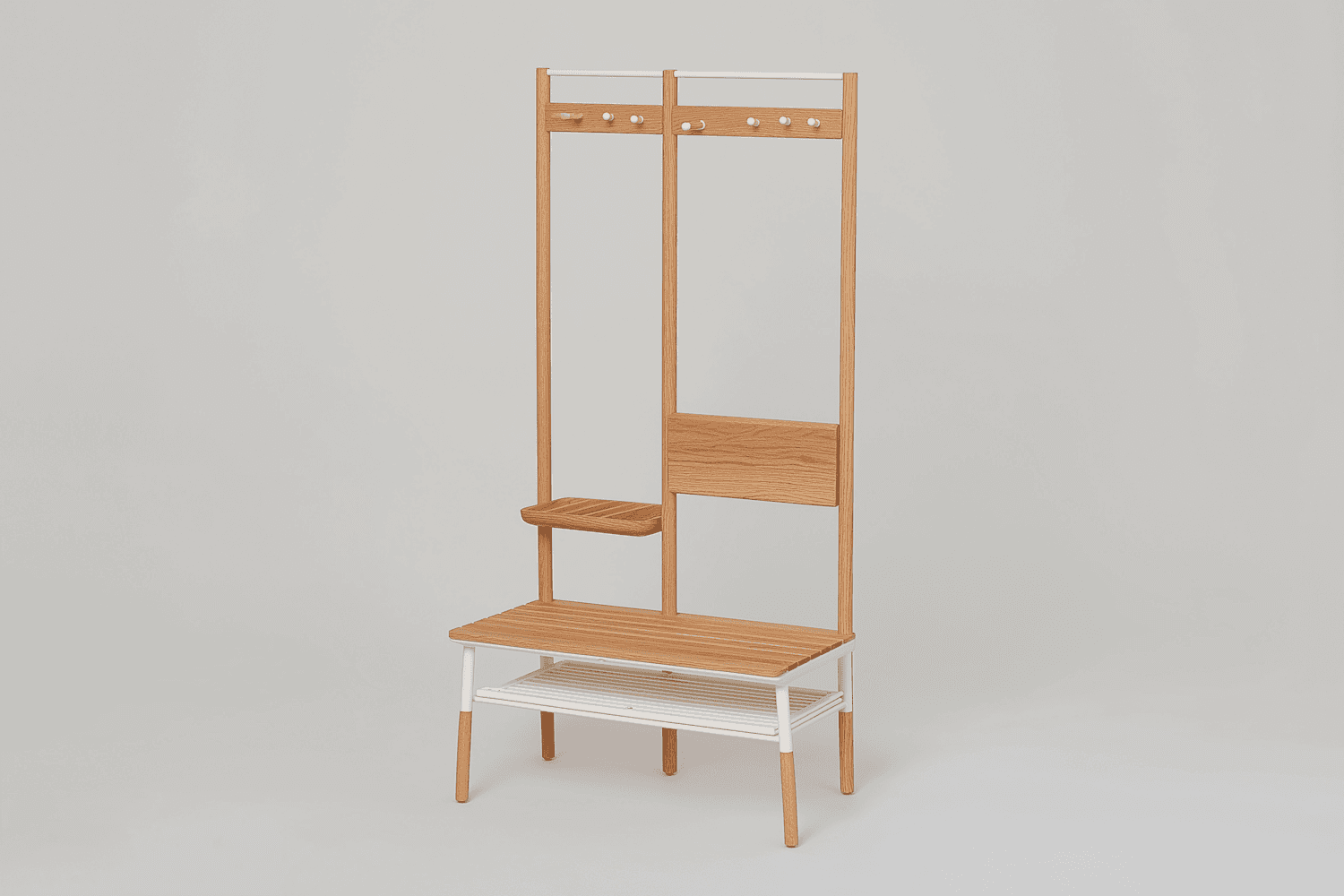
The side door entry is the hardest working four square feet in most Long Island homes, and it is usually the least designed. Everything that enters the house passes through it, and nothing has been given a specific place to land.
Here is how we set one up.
Start by counting the people, not the objects
The organizing principle of an entryway is people, not categories. Every person who uses that door gets a vertical column of their own: a hook, a bin above it, and a defined section of bench or floor below.
This matters more than it sounds. Shared hooks mean whoever arrives last has nowhere to put anything, and shared bins mean nobody feels responsible. A column with your name on it is a much stronger instruction than a bin labelled "hats".
Set hook heights per person
The most common mistake in a family entryway is hooks installed in a straight line at adult height. A seven year old cannot hang a coat on a hook at five feet, so the coat goes on the bench, and the bench stops being a bench.
Set each person's hook where they can reach it comfortably. It will look slightly irregular on the wall. It will also get used.
Decide what genuinely belongs at the door
An entryway can hold today, and it cannot hold everything.
Current-season coats, the shoes actually in rotation, and the bags that leave the house daily. That is roughly it. Off-season coats belong in a bedroom closet. Sports equipment used twice a week belongs in the garage at a station of its own, because it is bulky and it is not daily.
Being strict here is what makes the difference between an entryway that works and one that quietly becomes a storage room with a door in it.
Plan for the weather we actually get
Two Long Island specifics are worth designing for.
Wet and salt, from roughly November to March. That means a boot tray that can be lifted and rinsed, and a surface underfoot that will not be ruined by salt. Leave space for boots to sit apart and dry rather than stacked.
Sand, from June to September. If you are anywhere near the water, beach gear needs its own bin that lives outside or in the garage, not in the house. Beach towels are better kept with the beach gear than in the linen closet, because they are used together and they come home wet.
Give the small things a tray
Keys, sunglasses, and the mail that comes in with them: the things that get put down within a step of the door. One tray or one shallow bowl, and no more than one.
Two trays becomes four surfaces, and the pile comes back.
Leave the bench empty
The bench is for sitting down and dealing with shoes. The moment it holds anything permanently it stops doing that job, and shoes get dealt with standing in the doorway, which is where the pile starts.
If it is currently holding things, it is telling you that something in the room does not have a home yet. Find that thing a home and the bench clears itself.
Want a hand with it
We work across Nassau and Suffolk, and the first twenty-five minutes are free.
Book a free consultation